
Analog Hobbies: Why Pencil Drawing Is the Perfect Screen Break
Analog hobbies are trending as people look for screen-free time. Why pencil drawing is a great one: cheap, calm, portable and genuinely skill-building.
By Ayoub Farid · · 2 min read
Many people are looking for "analog" hobbies: things you do with your hands, away from screens. Knitting, journaling, film photography, puzzles, and drawing. Pencil drawing might be the easiest to start.
Why drawing is a great analog hobby
- Cheap: a pencil and paper.
- Portable: a small sketchbook fits in any bag.
- Calm: shading is repetitive and absorbing, a bit like knitting.
- Visible progress: unlike many hobbies, you can put your first and latest drawing side by side.
- Real skill: realistic drawing is learnable, and it changes how you see light and objects everywhere.
Getting started
- Get an HB and a 4B pencil and a sketchbook (supplies).
- Pick a time: evenings after work are popular.
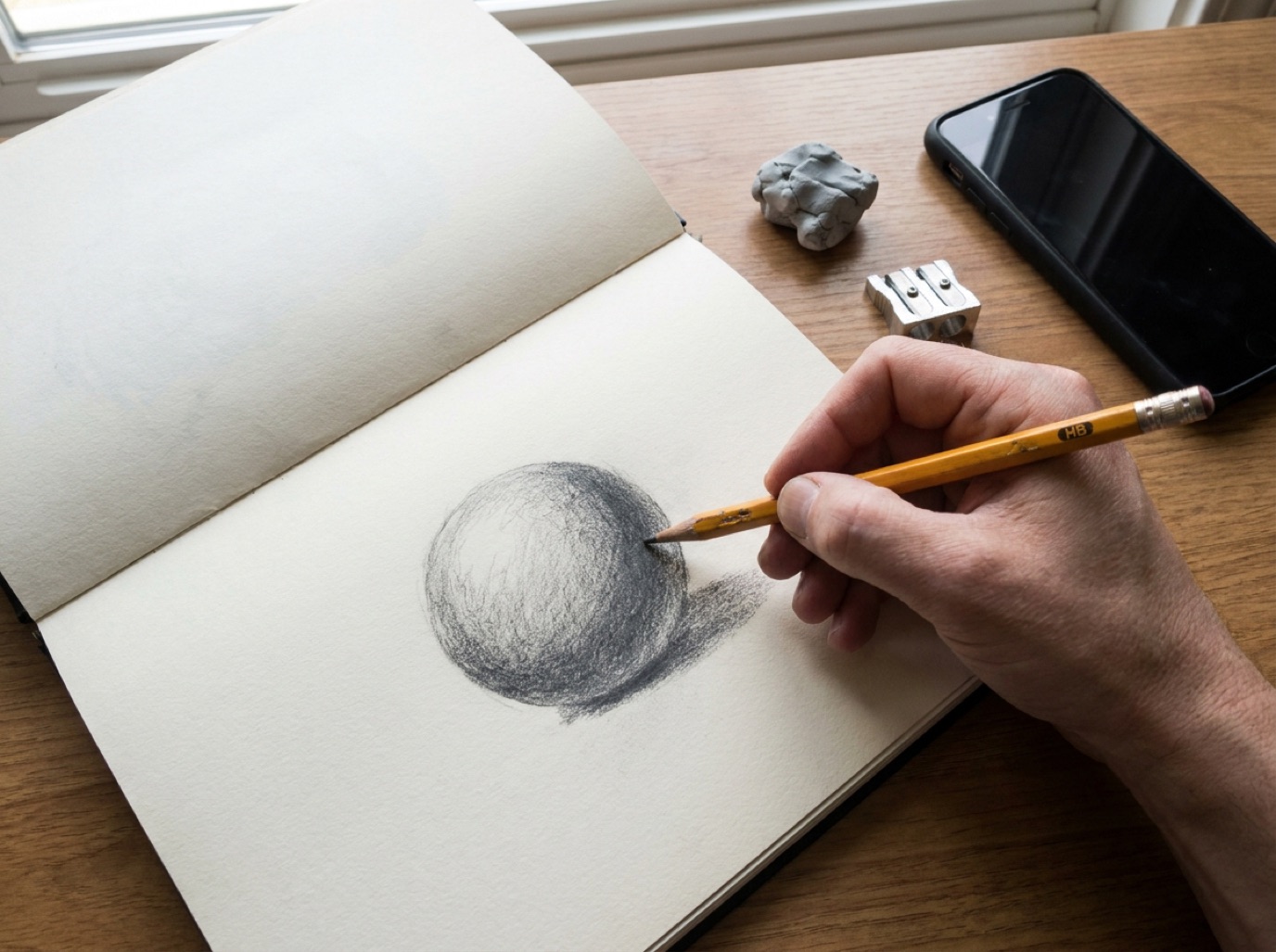
- Start with a value scale and a sphere.
- Draw simple objects from your home (easy things to draw).
"Analog" but not alone
You can keep the drawing analog while using a phone only for guidance: a lesson step to read, a reference to look at, a photo for feedback, then the phone goes face down. That's how Graphite is designed: real pencil, real paper, and the phone only for the step and the photo.
Drawing and relaxation
Many people describe drawing as calming: it demands attention on what's in front of you. If that's what you're after, read drawing for relaxation.
Pairing drawing with other analog hobbies
- Journaling: add a small sketch to each entry.
- Cooking: draw the ingredients before you cook.
- Gardening: draw a leaf or flower each week.
- Reading: draw a still life with your current book.
A cozy evening drawing ritual
- Make a warm drink.
- Set a lamp beside a simple object.
- Put your phone face down (or use it only for the lesson step).
- Draw for 15–20 minutes.
- Date the page and close the book.
Repeat it a few evenings a week. It becomes something to look forward to, not a chore.
Sharing without screens
If you want to share your drawings but keep the hobby analog, try a drawing swap with a friend, a small framed piece on your wall, or a handmade card. Some people photograph a month's work at once instead of posting daily. The point is to keep the time you spend drawing calm and focused, and the screen time small.
Frequently asked questions
Is drawing a good hobby for adults?
Yes. It's cheap, flexible, and adults can make fast progress with structured practice. See learn to draw as an adult.
Do I need to be creative?
No. Realistic drawing starts with observing what's in front of you.
How much time does it take?
Fifteen minutes a few times a week is enough to enjoy it and improve.