
Hard and Soft Edges in Drawing: Make Objects Look Real
Learn how hard, soft and lost edges work in drawing, where to use each, and how controlling edges makes pencil drawings look more three-dimensional.
By Ayoub Farid · · 2 min read
An "edge" in drawing is where one value meets another. Some edges are crisp, some fade gradually, some disappear. Controlling them is one of the quiet skills that separates realistic drawings from flat ones.
Types of edges
| Edge | Looks like | Where you'll see it |
|---|---|---|
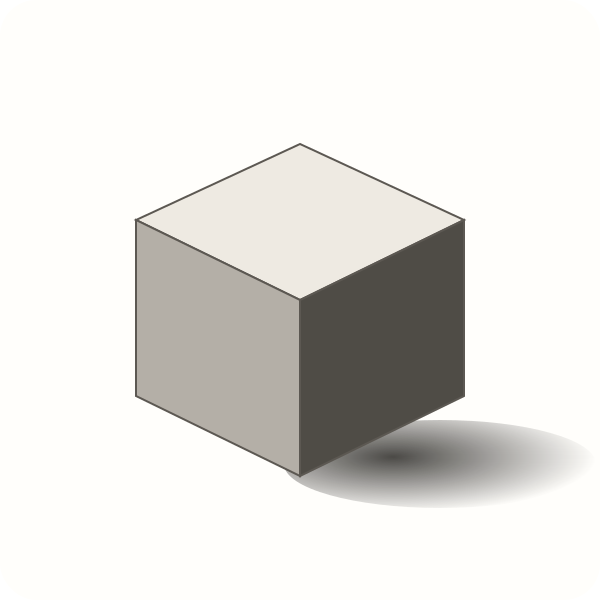
| Hard | Sharp, clear transition | Corners of a cube, the edge of a highlight on glass, the contact shadow |
| Soft | Gradual transition | The terminator on a sphere, far ends of cast shadows |
| Lost | Disappears into the background | Shadow side of an object against a dark background |
Rules of thumb
- Turning form = soft edge. The line between light and shadow on a sphere or egg is soft.
- Planes meeting at an angle = hard edge. A cube's corners are crisp.
- Cast shadows are hardest near the object, softer far away.
- Lit edges against a dark background are crisper; shadow edges are softer.
The outline trap
Beginners often outline every object with the same dark line. Real objects don't have lines around them. Replace outlines with value contrast: the edge exists because the object is lighter or darker than what's behind it.
How to make soft edges
- Shade with lighter pressure toward the edge.
- Blend the transition with a stump.
- Use the side of the pencil.
How to make hard edges
- A sharp pencil and a clean line.
- Mask with paper, or clean up with an eraser edge.
- Strong contrast on either side.
Edge practice
Draw a sphere and a cube side by side under one lamp. Then mark each edge with a letter: H for hard, S for soft. You'll find the cube is mostly H, the sphere's light-to-shadow transition is S, and both cast shadows go from H near the object to S further away. Shade them accordingly.
As a rule, look for the softest and hardest edge in your subject before shading, and make sure your drawing has both.
Frequently asked questions
Why do my drawings look like stickers?
Usually because every edge is equally hard. Soften edges in the shadows and on round forms.
Should I erase the outline after shading?
Lighten it with a kneaded eraser so shading defines the edge, especially on the shadow side.
How do edges create depth?
Sharper edges read as closer and in focus; softer edges read as further away or turning away.
Related: cast shadow, how to make drawings look 3D.