How to Improve Your Drawing Skills: 9 Habits That Work
Practical ways to improve your drawing skills faster: focused practice, feedback, redrawing, studying light, drawing from life and tracking progress.
By Ayoub Farid · · 2 min read
Drawing more is good. Drawing deliberately is better. These nine habits are what separate people who improve steadily from people who draw for years without much change.
1. Practice one skill at a time
Each session, pick a single focus: values, edges, proportion, a specific subject. Trying to improve everything at once improves nothing.
2. Get feedback
You can't fix what you can't see. Regular feedback (from a coach, community or teacher) points you to the next fix. (How to get feedback)
3. Redraw the same subject
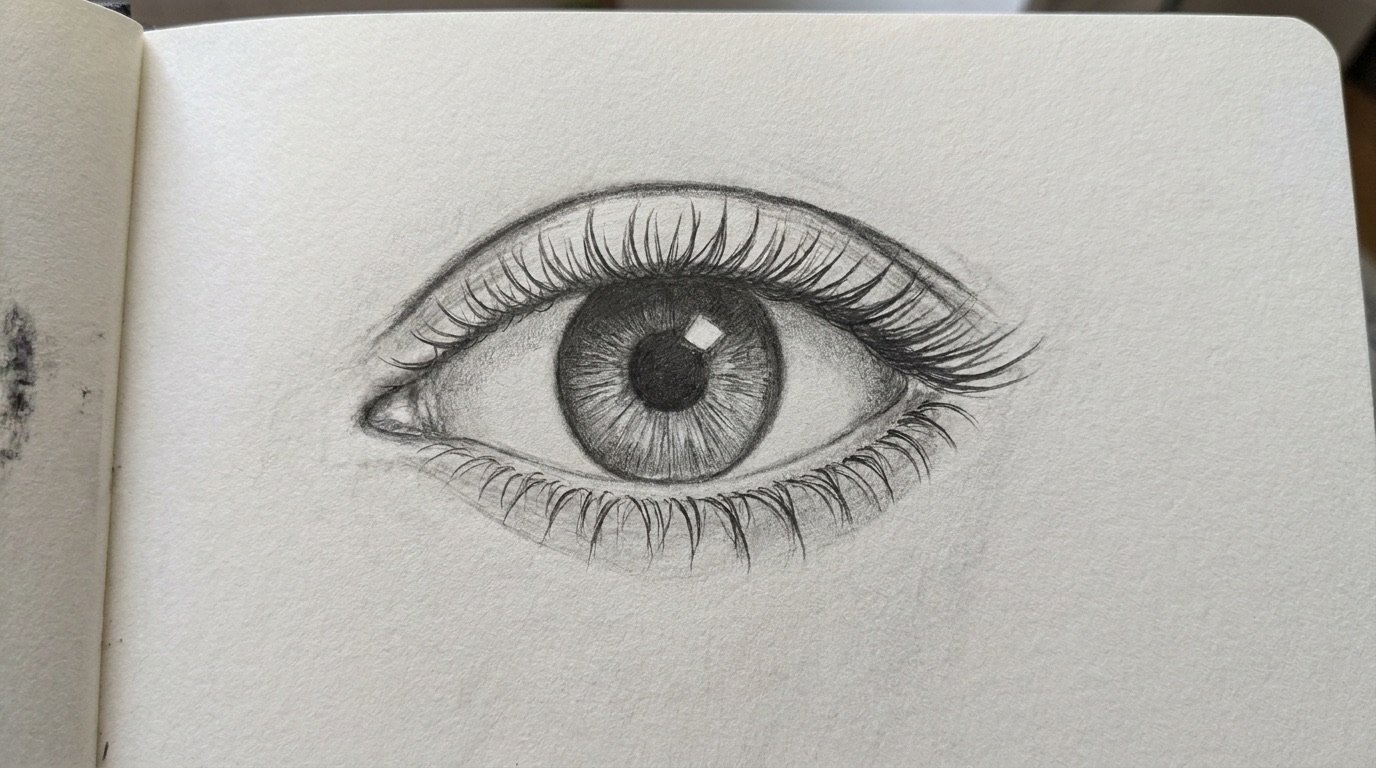
Draw the same egg, sphere or eye several times, fixing one thing each time. This is where most learning happens.
4. Learn the rules of light
Highlight, core shadow, reflected light, cast shadow. Once you know them, you stop guessing. (Light and shadow)
5. Draw from life
Real objects under one lamp teach form and light better than photos. (Observational drawing)
6. Study your mistakes
Keep a short list of your recurring mistakes and check for them at the end of each drawing. (Common mistakes)
7. Use the full value range
Push your darks. Most drawings improve instantly with a softer pencil and more contrast.
8. Work big to small
Big shapes and proportions first, then values, then details and texture.
9. Track your progress
Date your drawings and compare monthly. Seeing improvement keeps you going. (Build a habit)
A weekly improvement loop
- Monday: pick one weakness (e.g. "my cast shadows look like stickers").
- Tue–Thu: short focused exercises on it.
- Friday: apply it to a real subject.
- Weekend: compare with last week, choose the next weakness.
Your improvement journal
Keep a short log for a month. After each session, write:
- Date and subject
- Goal (one skill)
- What worked
- One fix for next time
At the end of the month, read it back. You'll see patterns: mistakes that disappeared, and the one or two that keep coming back. Those become next month's focus.
Small, regular improvements add up: one fixed habit per month is twelve better habits by the end of the year.
Frequently asked questions
Why am I not improving at drawing?
Usually: no feedback, drawing only what you're comfortable with, or never redrawing the same subject. Fix those three.
How fast can drawing skills improve?
With focused daily practice and feedback, many beginners see clear improvement in shading within weeks. See how long it takes.
Should I copy other artists?
Studying master drawings (for practice, not to publish as your own) is a classic way to learn values and edges.